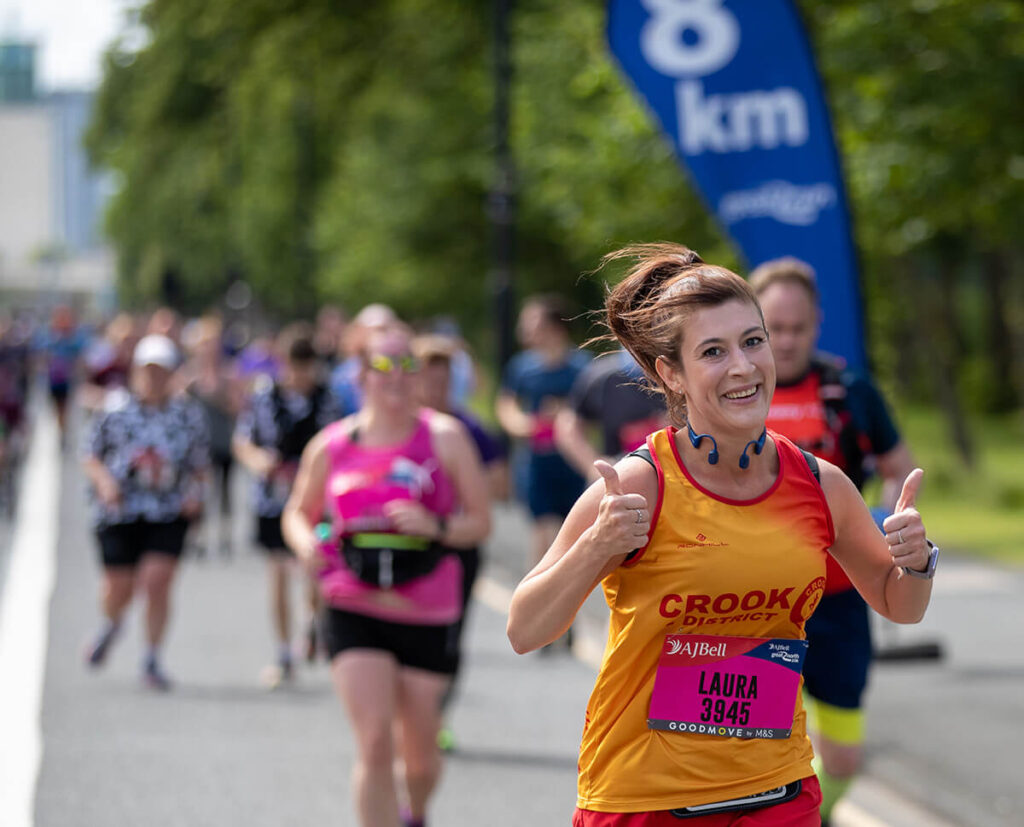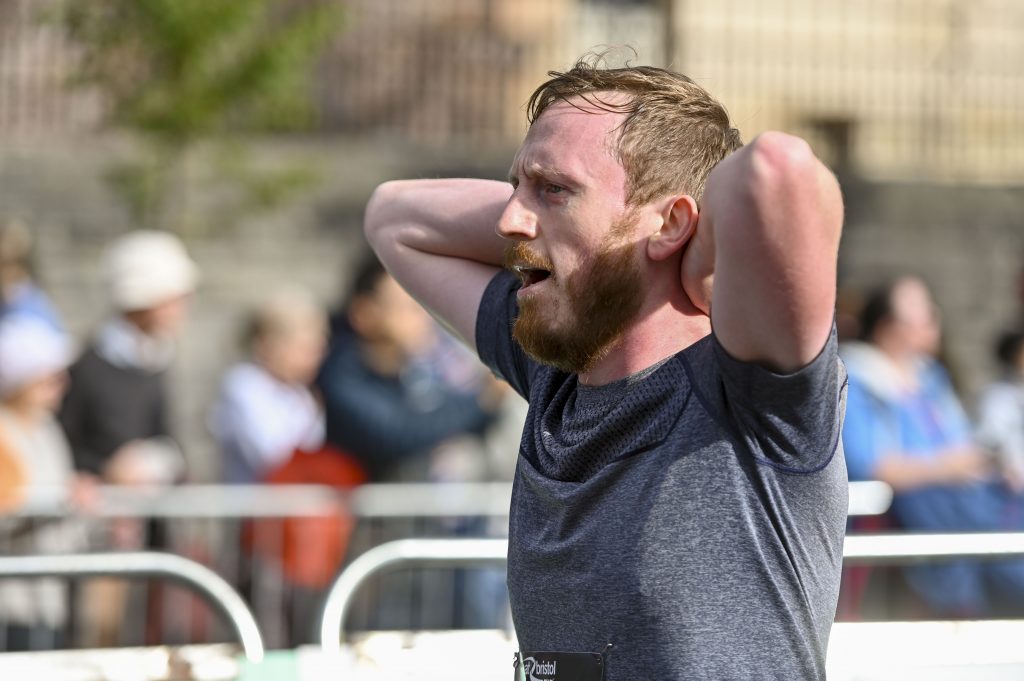

At Great Run, we pride ourselves on hosting events for everyone: the fast, the slow and the people who’d never dreamt of doing a 10k until Steve from IT twisted their arm at the Christmas party…and now it’s too late to back out.
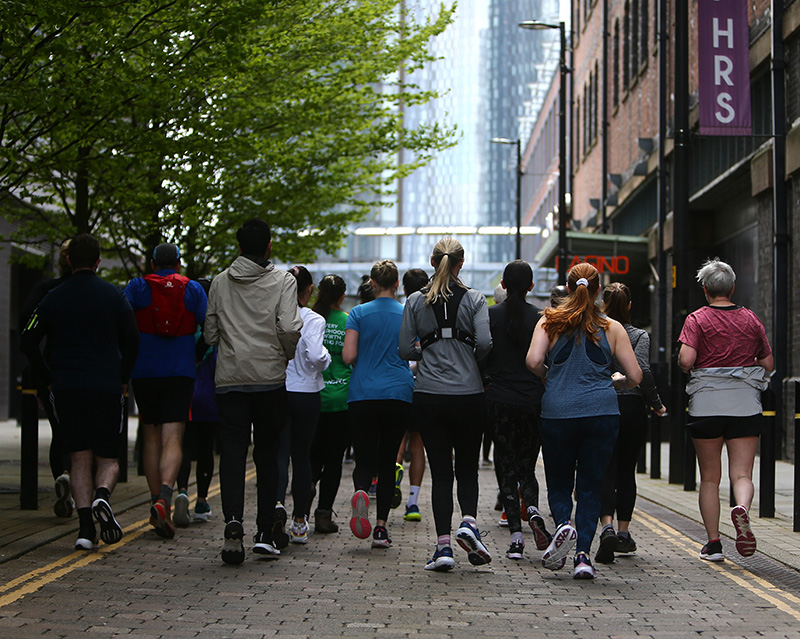
It doesn’t matter whether you’re aiming for a brand new PB or your goal is to stay a few steps ahead of the sweeper vehicle. If you’ve entered a Great Run Series event, we guarantee you this: there’s a place for every pace.
Every runner counts
Every runner has a reason to run.
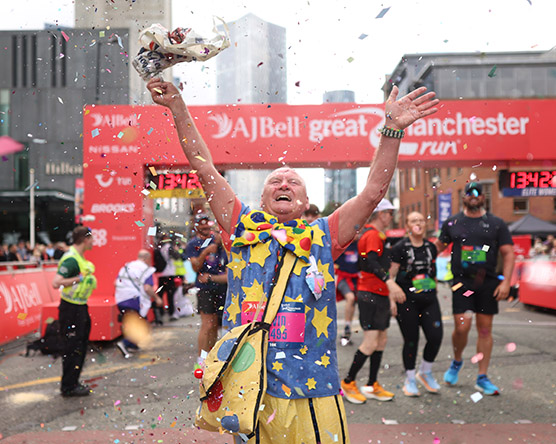
Some of our entrants are record breakers. Sir Mo Farah, a long-time friend of Great Run, holds the record for coming in first place at the most consecutive Great North Runs (six, if you’re interested). In 2011, we broke the record for the world’s biggest half marathon with 54,000 runners (now we’re at over 60,000). And we’ve attracted famous faces and North East legends – who could forget Kevin Kevin running in Newcastle *and* Sunderland AFC colours? Or Gazza pushing a wheelchair athlete around the course?
But elites and celebrities are only part of the story. Every year, our runners *literally* make the world a better place by raising millions of pounds for charity. In 2024, over £6 million was raised on the JustGiving platform alone by Great North Run runners.
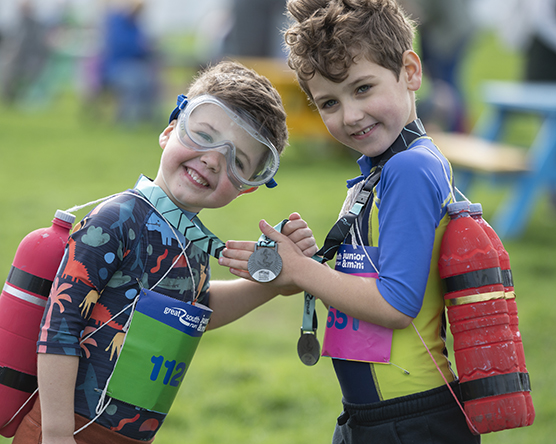
We’ve also got a special place in our heart for first-time runners who choose a Great Run event to find out what they’re capable of. We love to see people changing their mindsets and smashing their fitness goals. There’s a reason Local Hero by Mark Knopfler is our anthem.
Some sign up in memory of a loved one; others are raising money for a cause close to their heart. Whatever the reason, we’re so proud of every single one of our runners and their incredible achievements. We organise runs, not races. And we’re interested in personal goals, not cut-throat competition.
Every runner counts at Great Run, and every kind of runner is welcome.
Pacing different distances on race day
1.Experience level? First-time runner. Goal? To make it round the course…
Congratulations on signing up for your first running event! If you’re a first-time runner without a specific time in mind, this is the perfect opportunity to see some sights and soak up race day atmosphere. Nothing beats your first time – in fact, we’re a little bit jealous…
Here are our top pacing tips for beginners, whatever your distance:
- Avoid overwhelm. Many runners report running faster on race day than they’d planned to and then running out of steam. Try not get too hyped up by everything going on around you – remember, you’re in this for the long haul.
- If in doubt, employ the talk test. Can you talk comfortably at your pace? If the answer is yes, congrats – you’ve found your happy pace. If not, take some of the pressure off.
- Technology can help. The Runna app, for example, has a ‘no faster than’ feature which will (gently) alert you if you’re going too fast.
- Need a bit of reassurance that slow and steady is cool too? We’ve got exactly what you need here.
2. Experience level: this isn’t your first organised event. Goal: you’ve got a target time in mind
You’ve been running for a while, and might have an event or two under your belt. This time, you’re not coming to play, you want to slay (your goal finish time, that is).
Top pacing tips for intermediate runners:
- Use your goal finish time to work out your pace. So for example, if you want to finish your half marathon in 2 hours, you need to aim for an ‘ish’ pace for 5 min 40 per kilometre (check out Runna’s pace calculator here).
- Our friends over at Runners World suggest breaking your half marathon distance up into quarters. Imagine a half marathon as four 3 mile stretches (plus a little bit extra).
For the first quarter, don’t peak too soon: stay slightly below your target pace
For the second quarter, up your effort
For the third – and possibly toughest quarter – aim to run at your goal pace and stay strong mentally
And for the final quarter, tell yourself you’re nearly there – now is the time to go for it with everything you’ve got left! More tips on half-marathon pacing here.
Apply the same idea for a 5km or 10km distance, but split your race into three.
For your first 3km, aim to go slower than your target pace – treat this part like a warm-up
For 4-7km, build up to your target pace and then aim to tick to it. Don’t sprint to get there, though – it’s a waste of energy.
8-10km is the home stretch. Tell yourself you’re almost there and push harder the closer you get to the finish line.
3. Experience level: advanced. Goal: a shiny new PB
All of the above – splitting up your distances into thirds or quarters, using technology and avoiding overwhelm – still applies for advanced runners. Read on for more top tips to turn your target pace into a reality:
- Nail your training. Every runner should stick to a training plan, but it’s particularly important for advanced runners with a specific goal in mind. Every element is important – don’t skip your strength training, or your long runs for that matter. Steady miles are often undervalued, but they form the foundation of any runner’s training journey.
- Use the data. If you’re tracking your training using a running app or watch, you can use this to work out whether you’re on target to meet your goals. Working towards a 10K event? Take a recent 5K time and multiply by 2.085, otherwise known as the Riegel formula (the extra 0.085 allows for fatigue over a longer distance).
- Pick a pacer. All Great Run events have pacers present – and some even run with sound systems to make the experience more fun. Running with a pacer on race day can take the pressure off checking your splits mid-run and focus on what’s really important: running.
10k pacing tips here, plus all your 10k training questions answered.
Now all you need is an event to train for. Find your next Great Run here.